14 min read
Top tips to improve home safety
Blog

You want your home to be a safe haven for your family, but what does home safety mean to you and where do you start? Many people tend to focus on making their home safe from external threats, although securing the inside of your home may be just as important.
All this of course depends on where you live. In some parts of the world, external threats are real and should be prioritised. But if you live in a place where natural disasters are rare and the crime rate is low, improving your internal home safety is probably a better way to start. That is why this article will focus on how you can make the inside of your home a safer place for you and for your loved ones.


1. Electrical safety at home
Most of us rely on electricity in our everyday life at home. Water supply, air conditioning, lighting and wifi are just some examples of things that need electricity to function. Security alarms and other safety features at home, depend on it too. Although electricity is our best friend in many ways, bad wiring, and incorrect use of electrical devices, can cause accidental electrocution and structural house fires.
- Have a professional electrician inspect your electrical system periodically to make sure that it is safe and up to code.
- Do not overload your electrical sockets at home and be especially careful with extension cords.
- Pull out chargers and other devices from the socket as soon as you do not use them.
- Never unplug an electrical appliance by pulling at the cord. Always use the plug.
- Check the cords of your electrical appliances regularly. If the plastic casing of the cord is breached, get the cord replaced or repaired by a professional.
- If you have young children at home, install outlet covers and tamper-resistant outlets.

2. Child-proof your home
To even imagine your child getting seriously hurt is the worst nightmare of any parent. The good news is that there are many simple measures you can take to keep your children safe:
- Install child gates to prevent young children from accessing staircases or other high-risk areas.
- Get a stove guard for the stovetop and add a child-proof oven door lock for your kitchen stove.
- Install outlet covers to keep curious fingers from tampering with electrical sockets. Also see previous paragraph about electrical safety.
- Secure furniture to the wall with furniture anchors. This prevents them from tipping over if a child pulls on them.
- Keep medication and chemicals, including your cleaning supplies, out of reach from small children to avoid accidental poisoning.
- Invest in a baby monitoring system. Nowadays, there are many smart alternatives that you can connect to your mobile phone or tablet.
- Never leave small children alone in the bathtub as the risk of drowning is high for young children, even in very shallow water.
- Keep knives and scissors, small and shiny objects, as well as fragile items that may break into shards out of reach from young children to keep them safe from cuts and suffocation.

3. Fire safety at home
Even though the number of house fires has reduced over time, this is still a real threat to your safety at home. According to the NFPA (National Fire Protection Association) in the US, the top 3 causes of house fires are cooking (49%), heating equipment (13%) and electrical distribution and lighting 9%. In total, only about 12% of all house fires are caused by external factors (intentional 9%, fire exposure 3%). This means that there is a lot that you can do to improve fire safety inside your home, like for example:
- Never leave lit candles, open fires, or food cooking on your stove/in your oven unattended.
- Install smoke alarms in all rooms, including the basement and attic. Also make sure that the smoke alarms are correctly placed and installed and that the batteries are tested on a regular basis. Always follow the instructions from the smoke alarm manufacturer.
- Invest in a fire extinguisher. It is important that you know how to operate your fire extinguisher and that you update it regularly, as all fire extinguishers have an expiration date.
- Buy a fire blanket. Fire blankets are perfect for putting out small fires. They are also easier to use than fire extinguishers for most people.
- Create a fire escape plan that you practice a few times a year with all the members of your family. If everyone knows what to do in case of a fire, you are much more likely to get everyone out safely.

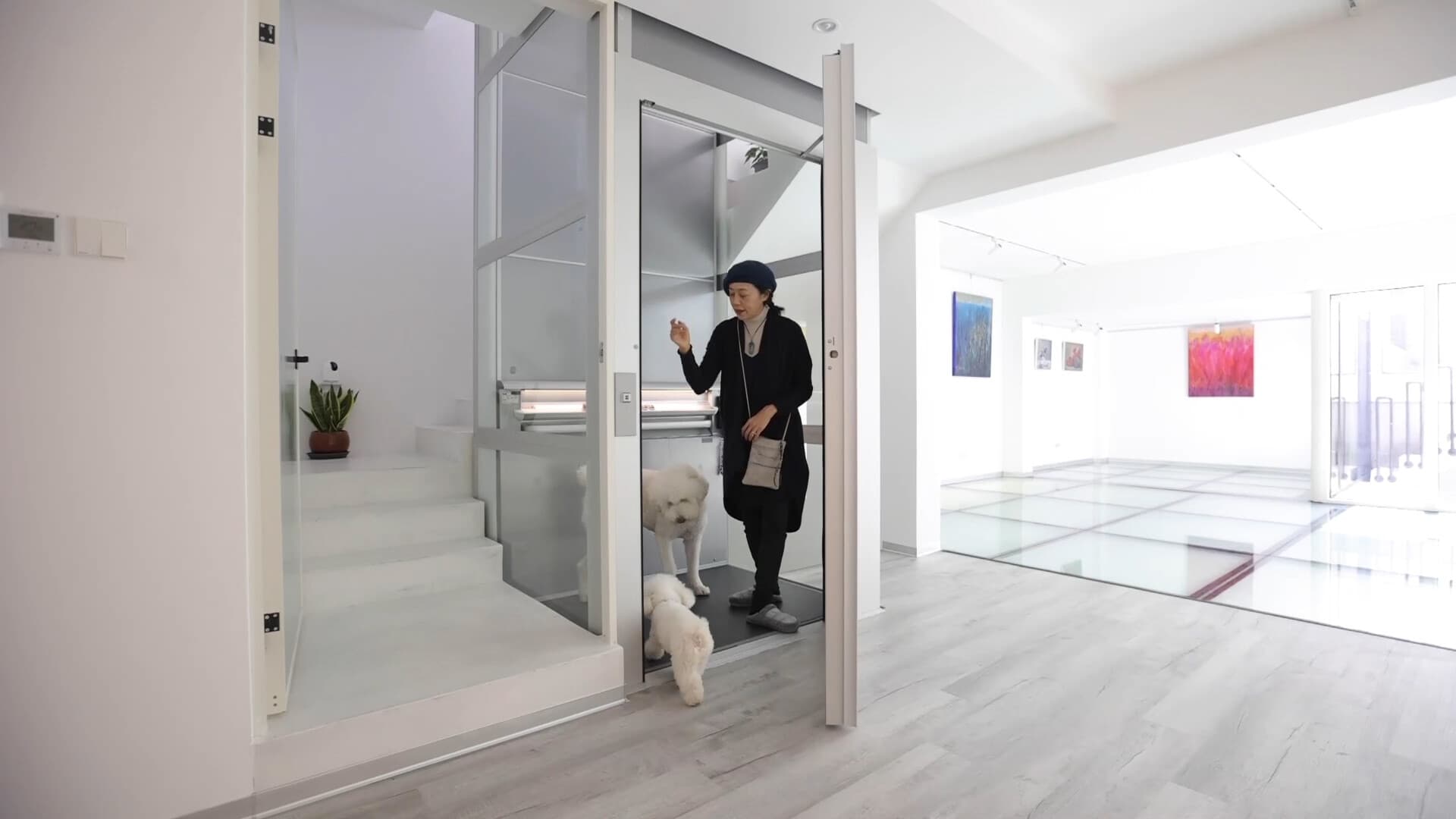
The Kalea A4 Primo is a compact home lift that can prevent trip hazards.
4. Make your home safe from trip hazards
Many people think that trip hazards do not become a real risk until you become an elderly person, but that is not true. Young and fit persons also injure themselves in falls. The risk of falling is especially high when using ladders for work around the house, or when running up and down the stairs carrying heavy items, such as laundry baskets, vacuum cleaners, furniture, or large boxes. Luckily, you can prevent falls at home by employing some simple safety routines and by adding or modifying certain home features. Here are a few tips:
- Watch your step when carrying heavy and bulky objects in staircases or across thresholds and teach all members of your family to the same.
- Installing a home lift is a smart solution to prevent accidental falls in your staircase that also has the benefit of adding comfort and value to your home.
- Always make sure that your ladder is stable and is standing on a flat and even surface before climbing it. If you need to climb high, it is always safer to have someone with you.
- Put non-slip gripper pads or non-slip strips under your rugs to minimize the risk of tripping or sliding on them.
- Keep your staircase and floors free from clutter and make sure to make comfortable passageways in between furniture.
- Lower high thresholds or remove them entirely, if that is an option.
- Store your frequently used items within easy reach for all adults of the household and toys within easy reach for your children.

5. Providing first aid at home
Although some injuries or health issues require a trained health professional, being able to provide first aid at home can prevent unnecessary medical visits and increase your feeling of safety at home.
- Assemble a comprehensible first aid kit, ensuring that it is easily accessible to the adult members of the household. The American Red Cross has a great list of what to include.
- Keep an eye on the contents of your first aid kit and update it periodically, as some items have an expiry date.
- Consider taking a CPR (cardiopulmonary resuscitation) training and a basic first aid course to be prepared for emergencies. The Red Cross and many other health organisations provide classes.
Conclusion of our top tips for greater home safety
Improving internal home safety requires careful planning and proactive measures, but the fact that you protect your loved ones makes it all worth it. By implementing our tips and safety strategies, you can significantly enhance the safety and security inside your home.
Please remember that you do not need to do everything at once. Start with the tips that you can easily implement and build from there. If you keep at it, your home will soon be a much safer place for you and your family.
Did you enjoy this blog and want to read more? Then just visit our blog space. If you have questions about home lifts or residential elevators, please feel free to contact us.