14 min read
The Best Lift for Your Care Home or Clinic
Blog
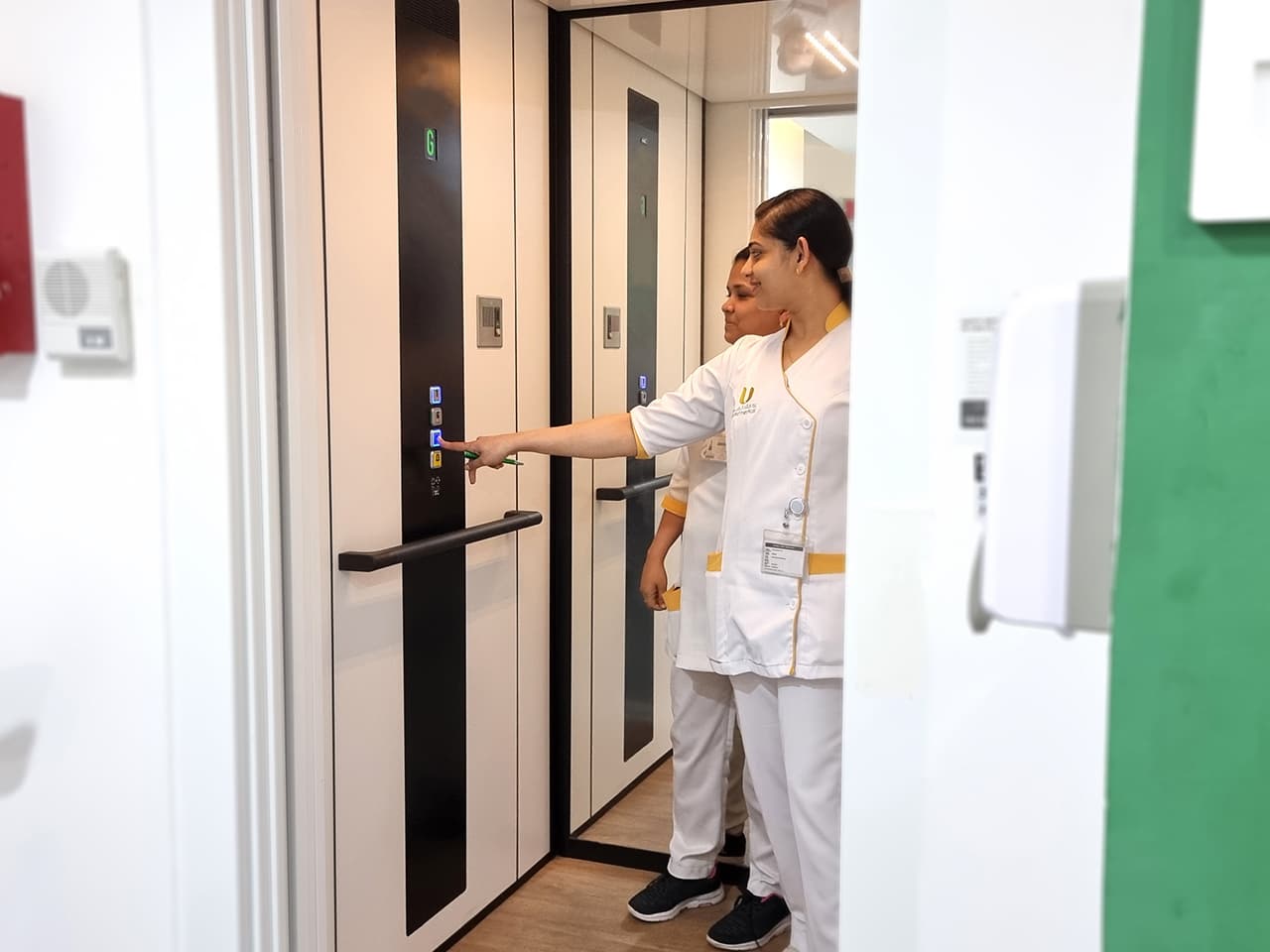
The choice of the best lift for your care home or clinic is an important one, given that safe transportation of patients around the building is key. Regardless of what elevator solution you choose, the elevator should be easy for medical staff to use, and the drive system should be reliable. So how do you evaluate different lift alternatives to pick the best one?
While care homes and nursing homes need medical lifting equipment, such as patient lifts, clinics may only need an elevator to transport patients between floors. However, because safe vertical transportation between floors is key for both types of establishments, it will be the focus of this article.


Determining the Needs of Your Care Home or Clinic
Just answering the 4 simple questions below will help you find the right lift type and elevator model for your clinic or care home:
- How many floors does the lift need to serve?
- Is the lift speed important?
- Does the elevator need to carry stretchers?
- How big is your budget?
Elevator Types for Medical Establishments
There are many different types of passenger lifts that are suitable for clinics, nursing homes, and other medical facilities, but some of the most common ones are hydraulic lifts, traction lifts and screw-driven lifts. Every lift type has its pros and cons.
Traction Elevators
Traction elevators, also called electric lifts, work with steel ropes or flat cables and a counterweight. This elevator type can travel several metres per second and is a good choice for high-rise buildings, where you need fast, heavy-duty lifts. While traction lifts offer you great lifting capacity, and high speed, and are comparatively energy-efficient, they require a lot of space and costly construction work. In addition, traction lifts generally need frequent maintenance, which increases operational costs.
Hydraulic Elevators
Hydraulic lifts work with hydraulic pressure and offer you a wide variety of brands and models. They are common in low to medium-rise buildings, due to systems limitations and the lower max speed of approximately 0.6 metres/second. While hydraulic elevators need less space and construction work than traction lifts, many models require quite a deep lift pit to fit the hydraulic machinery. Hydraulic lifts are generally less expensive than traction lifts but should only be installed in environments with a stable temperature, as even small fluctuations can influence the function.
Screw-driven Lifts
Screw-driven lifts, just like traction lifts, are electric lifts but have a much simpler construction. An open platform or enclosed lift car is attached to a drive nut moving up and down a large screw, powered by an electric motor. Screw-driven lifts are mostly used in low-rise buildings with 2-4 floors but can cover up to 6 floors. They travel at a lower speed than traction and hydraulic lifts, (max 0.15 metres per second), but offer other advantages. For example, screw-driven elevators always have a built-in machine room and only require a minimal lift pit and headroom. In addition, this type of lift often comes with a ready-made lift shaft so that you do not need to build one. They are also very low maintenance compared to other lift types. This makes screw-driven lifts both space-saving and cost-efficient lift solutions.

Let Your Needs Guide Your Choice of Lift Type
In conclusion, what the best lift choice is for your care home or clinic depends on your priorities and needs.
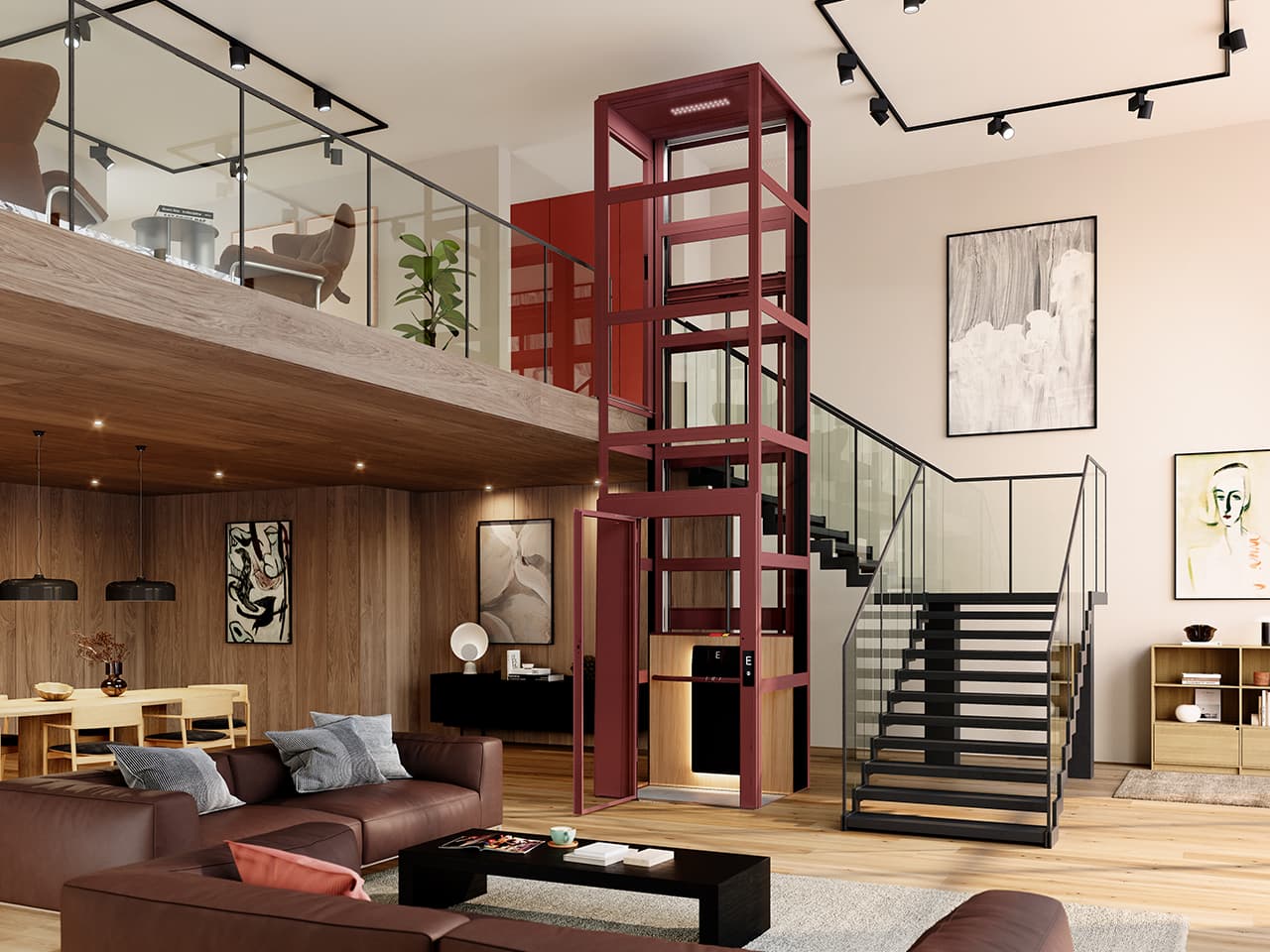
If you need a very fast elevator that covers 8 floors or more and space and cost are secondary, a traction lift is probably the best choice. If on the other hand, space and cost are an issue and you need a relatively fast lift to serve 2-6 floors in a building with excellent temperature control, a hydraulic lift is a good solution. But if your medical facility has limited space, a tight budget and high speed is unimportant, screw-driven lifts, like the Kalea A4 Mille, or the Kalea C1 Futura, are space-saving and cost-efficient solutions.
Lift Models for Medical Facilities
The choice of lift type is important, but so is the choice of lift model. In fact, different lift models offer your medical establishment different advantages. One useful way of classifying vertical elevator models is by dividing them into cabin lifts and platform lifts:
Cabin Lifts
Cabin lifts make the passengers travel inside a fully enclosed lift car and are installed in a site-built or ready-made lift shaft. Elevators with a cabin generally take up more space in the building than platform lifts, especially if they have automatic sliding doors on the landings and inside the cabin.
This type of lift model always works the same way regardless of in what country your care home or clinic is located:
- Landing controls: Automatic drive (one push of the button is enough).
- Lift car controls: Automatic drive.

Platform Lifts
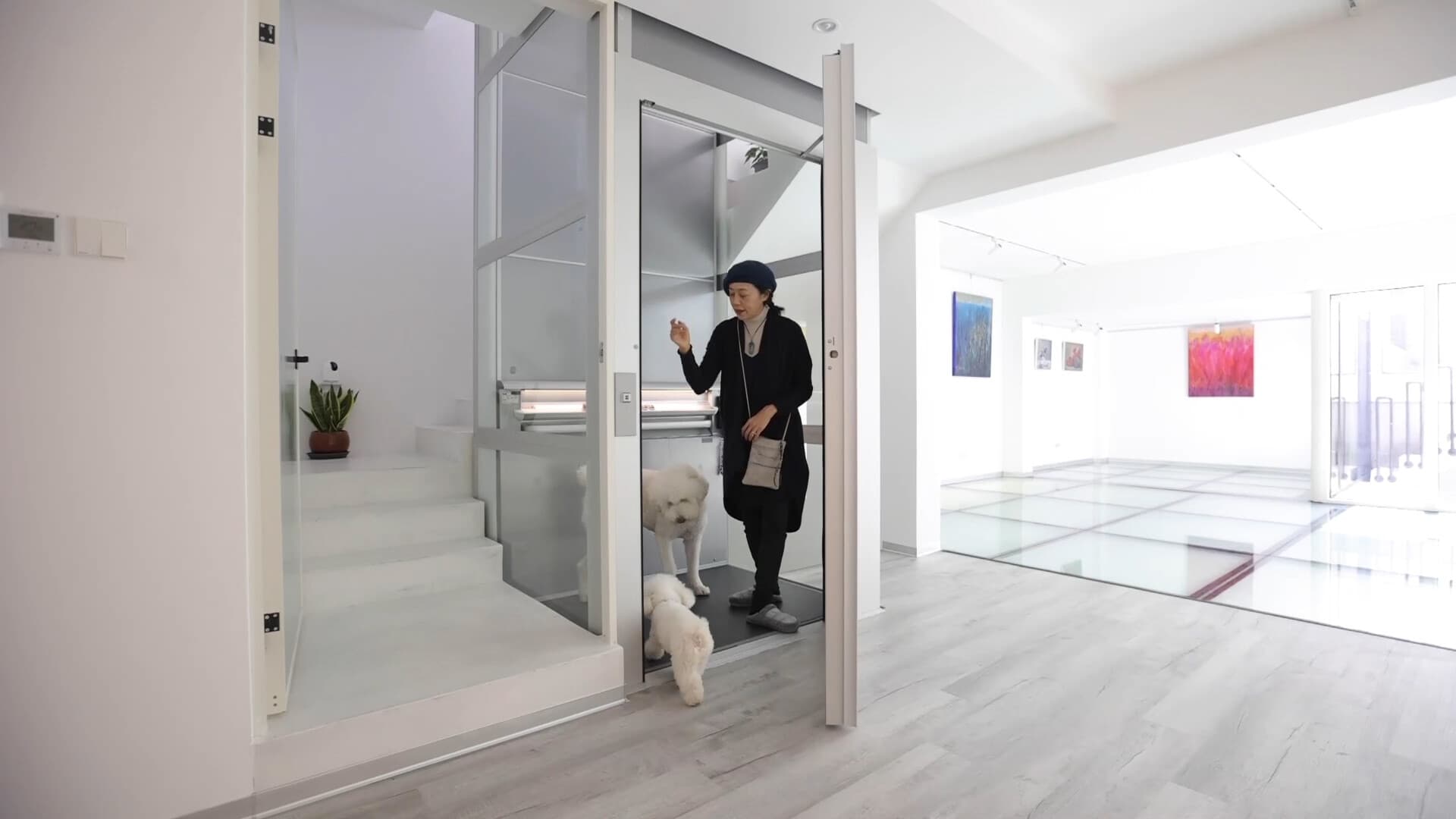
Platform lifts make the passengers travel on an open platform instead of in a fully enclosed cabin. In general, vertical platform lifts include a ready-made shaft enclosure and single-hinged doors instead of sliding doors. This makes platform lifts more space-efficient than cabin lifts.
How platform elevators are operated differs slightly between countries:
- Landing controls: Automatic drive (one push of the button is enough).
- Platform controls: Hold-to-run (you need to keep pressing the button during travel) or automatic drive, depending on your country.
Hold-to-run platform controls are mandatory in countries abiding by European Safety Standards. Many countries outside of Europe, however, allow automatic drive for both landing and platform controls. To get more information, please contact your local lift dealer.

Lift Size Matters for Medical Establishments
If the lift only needs to accommodate patients in wheelchairs, a platform size of 900 x 1400 mm, or a cabin size of 1100 x 1400 mm (w x d), may suffice. But if the lift needs to be big enough for stretchers and hospital beds and accommodate 1-2 attendants, a lift size of about 1400 x 2400 mm (w x d), with 1200 – 1300 mm wide doors, is advisable.

The Kalea A4 Mille exists in a stretcher-friendly platform size of 1405 x 2480 mm (w x d).
Get Professional Advice
The next step to finding the best lift for your clinic or care home is to contact the lift local dealers. Most lift dealers will offer you advice and provide you with a lift quotation, completely free of charge. If your lift dealer has offices close to your medical establishment, you can even ask for a meeting at your facility. Kalea has a worldwide network of dealers, just contact us for more information and we will help you find the closest one.
Contacting several manufacturers or dealers makes it possible to make a more detailed comparison between the different lift models and services on offer. As you will discover, the purchase price of the lift is only one important aspect. If installing your lift has a big structural impact, the building adaptations and construction work can become very costly. In addition, most lifts and elevators have a lifetime of 25 – 30 years, so the operating costs, such as energy consumption, lift maintenance and modernisation, are important to consider.
Another great advantage of talking to lift dealers is that they can suggest options and accessories tailored to the needs of your establishment, for example:
- Remote call buttons placed a few metres away from the lift to make it easier for staff transporting patients in hospital beds to call on the lift.
- Level indicators and voice announcement to tell lift users that the lift is arriving.
- Fire-rated lift doors to comply with local or national fire safety regulations.
- Kick plates in stainless steel to protect the lift doors.
- Hard-wearing and easy-to-clean lift flooring in aluminium chequer plate.
Do you want to read more? Then please visit our blog space. For more information about the products of Kalea Lifts, please contact us.